
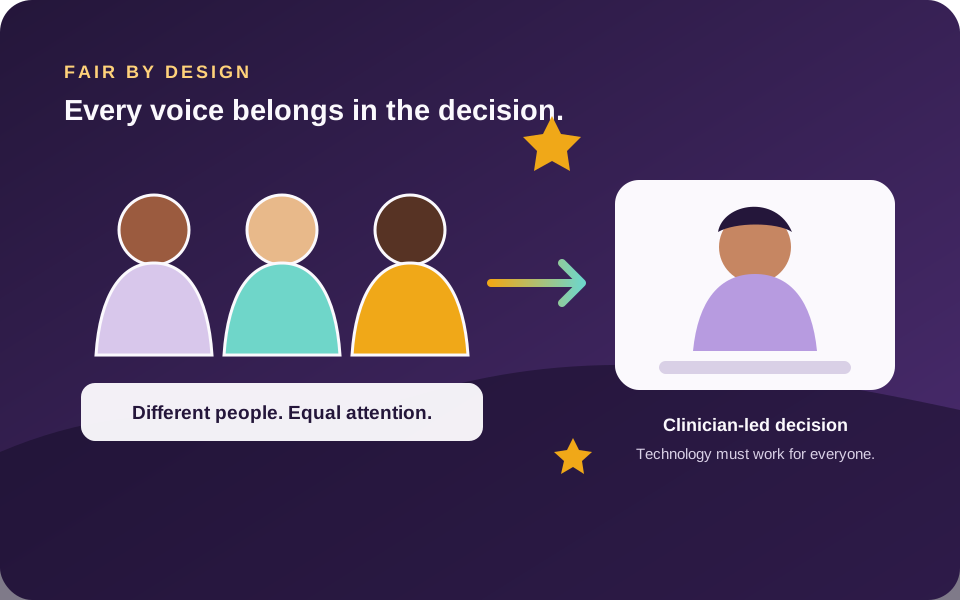
When someone arrives in urgent care, the first decision is not a treatment. It is a judgement about how urgent they are, and how quickly they need to be seen. That decision shapes everything that follows.
At HASTE-3D, we are building an AI-powered remote triage system for NHS urgent care and A&E. Our name stands for Holographic AI Smart Triage Engine, 3D. Before we talk about what the technology does, we want to be clear about what it must never do: work better for some people than for others.
The gaps are real
Health technology has a record of being built around a narrow idea of a typical patient. A UK government review of equity in medical devices highlighted that pulse oximeters can overestimate oxygen levels in people with darker skin, potentially delaying treatment.
National maternity reviews by MBRRACE-UK document persistent inequalities in maternal outcomes, including higher mortality rates for Black women. The Women’s Health Strategy for England also recognises that women have been under-represented in important clinical trials, leaving gaps in what is known about women’s health. When evidence and design leave people out, the tools built on them can leave people behind.
These are not technology problems alone. They begin with who is in the room when something is designed, and whose data is used to test it.
What we commit to
- Test our technology separately for women and men, across skin tones, ethnic groups, ages, accents and languages, and publish what we find.
- Co-design with Black patients, women, clinicians and community organisations, and pay people fairly for their time and expertise.
- Carry out an equality and health inequalities assessment before each major release, and act on it.
- Report openly every year, including where we fall short.
What we are not saying
We are a small, founder-led company at the start of this journey. We are not claiming to have solved these problems. We are saying we will build in the open, hold ourselves to measurable standards and be corrected when we get it wrong.
Our full pledge: Read our Diversity, Equity and Inclusion pledge, including how we will test, report and invite challenge.
Read the evidence
- UK Government: Equity in medical devices independent review — findings and recommendations on bias in medical devices, including pulse oximetry and skin tone.
- MBRRACE-UK: maternal reports — national reports on maternal mortality and maternity care.
- UK Government: Women’s Health Strategy for England — clinical trial representation and persistent gaps in women’s health evidence.
Join us
If you are a clinician, patient, carer or community organisation who would like to help shape what we build, we would like to hear from you. We will pay people fairly for their time and expertise. Get in touch with HASTE-3D.
HASTE-3D is in early-stage development. It is not yet clinically validated and is not an approved medical device. This article is for information only and is not medical advice.